


If you’re a wheat farmer – you know the signs. You’re watching those heads change colors every day. Checking the moisture. Cranking up the combine and get it cut. Then store it in the bin.
Your work is finished. Or is it? Hopefully you answer, “No … we treat it to keep the bugs away.”
Stored grain can be a depreciating asset once it leaves the field … almost like buying a new car and it loses value the minute you drive it off the lot.
Bugs have other plans. They’re probably already setting up shop in your bin … in your wheat, and in 2026 – they had a head start.
2026 has been … Different
NOAA data confirmed that winter 2025-2026 was the second warmest in 131 years. Across much of the grain belt, the expected cold weather didn’t happen … and didn’t naturally thin the bug population. There are more bugs in 2026 than normal, and the timeline from “clean grain” to “infested grain” is much shorter.
If you’re aware – and take appropriate steps at harvest – your crop should be fine.
If you wait until you see an infestation – you have a real problem – largely one that negatively impacts your bank account. You will lose value in your stored grain due to weight loss, quality, and much more.
You have choices … Be smart with your investment in your stored grain.
At Real McCoy, we offer two fundamentally different ways to protect stored grain. Understanding the difference helps you decide what fits your operation and budget.
Approach 1: Safe Insecticides
This is the most common and cost-effective approach. A grain protectant is applied directly as grain goes into the bin. It provides residual insect control from day one — killing adults on contact, disrupting reproduction, and maintaining a protective barrier throughout storage.
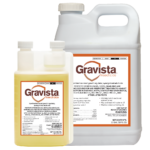 Our flagship product, Gravista, is a 3-in-1 formulation that combines an adulticide, an insect growth regulator (IGR), and a synergist in a single application. That means you get immediate knockdown, long-term reproductive disruption, and enhanced efficacy — all without needing a pesticide applicator’s license.
Why does the “no license” part matter?
Fumigants like Phostoxin (aluminum phosphide) are restricted-use products that require a certified applicator. That means hiring someone, scheduling around their availability, sealing the bin, and waiting days for re-entry. Gravista and Centynal SI are general-use products. You and your team can apply them directly the day grain goes in.
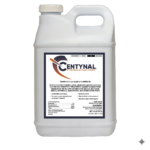 If bugs are already in your grain, Centynal SI is designed for exactly that — fast knockdown of existing bugs without the cost, downtime, or safety concerns of fumigation. It’s your rescue treatment. For longer-term storage, Gravista is the prevention play.
Approach 2: Cool it down
The Granifrigor takes a completely different approach. Instead of chemistry, it uses temperature. The unit — used in over 100 countries — pushes refrigerated, humidity-controlled air through your grain mass, dropping the temperature below 55°F regardless of ambient weather.
At that temperature, every major stored grain insect species enters dormancy. No feeding, no reproduction, no damage. Not dead — dormant. As long as the grain stays cool, the insects stay inactive.
The Granifrigor also includes a built-in humidity control system (HYGROMAT) that automatically matches the cooled air to your grain’s equilibrium moisture, so it cools without over-drying or rewetting. It works in any climate — rain, fog, 100-degree heat — because it conditions the air before pushing it through the grain, unlike natural aeration which depends entirely on weather.
For organic operations, the Granifrigor is often the only viable option for long-term stored grain protection. No chemicals means no certification conflict.
Key things to know about the Granifrigor
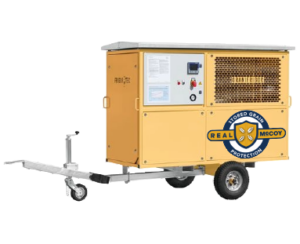
- Initial cooling takes 3 to 6 weeks depending on bin size, grain type, and storage configuration
- Once cooled, grain naturally retains temperature for an extended period — duration depends on storage type, insulation, and climate
- No pesticide applicator’s license required — it’s a physical process, not a chemical treatment
- Most operations see ROI in 1 to 2 years from eliminated chemical costs, avoided fumigation fees, reduced drying energy, and prevented grain losses
- Works with flat storage, warehouses, upright silos, and standard bins
The Bottom Line
This year, your grain harvest is right after a warm winter that didn’t kill the bugs. It will be really important to make smart decisions … at harvest … and before you have a real problem.
Contact us. We’re ready to help.